 In the constantly changing world of radio frequency tech, Class AB RF Amplifiers have really become key players. They strike a pretty good balance between performance and efficiency, and you’ll find them popping up in all sorts of applications. If you’ve seen the latest industry reports from MarketsandMarkets, you'll know the RF amplifier market is expected to hit around $5.88 billion by 2025. That’s a solid growth rate of about 6.4% since 2020. It really highlights how important it is to squeeze out as much performance as possible from these amps, especially now with more and more high-frequency tech taking center stage.
At Mars RF Microwave, we’re all about using the latest manufacturing tech—think SMT machines and high-vacuum eutectic furnaces—to craft top-notch Class AB RF Amplifiers that meet even the toughest standards out there. We’re pretty proud of our focus on quality and innovation, which helps us stay ahead in this fast-moving industry. Our goal? To make sure our products don’t just meet expectations but go above and beyond, even in a super competitive market.
Understanding Class AB Amplifier Fundamentals and Their Role in RF Applications
You know, Class AB amplifiers are pretty important when it comes to radio frequency stuff. They strike this cool balance between being efficient and sounding good. Unlike those Class A amps that run all the time and give super clean sound but suck up way more power, Class AB amps only kick in when you really need them. That means you get decent sound quality without wasting tons of energy. This is especially handy in RF circuits, where keeping the signal clear and saving power at the same time is such a big deal.
So, if you wanna understand how Class AB amps work, it helps to look at their design. Basically, they use this push-pull setup—two transistors taking turns to boost the input signal. That way, they minimize distortion when switching back and forth. That’s super important for RF, since keeping the signal spot-on is crucial for good communication. The hybrid nature of Class AB amps makes them pretty versatile—they can handle everything from wireless transmitters to audio systems—making them quite the essential in modern electronics.
Key Performance Metrics: Efficiency, Linearity, and Output Power in Class AB Designs
You know, Class AB RF amplifiers are kinda like the sweet spot—they strike a nice balance between efficiency and linearity, making them really versatile for all kinds of applications. Efficiency’s a big deal, especially when power consumption matters. Unlike those Class A amps, which run all the time and end up wasting a lot of power, Class AB designs cut down on that waste while still doing a good job performance-wise. They achieve this by carefully biasing the transistors so the amp operates in the Class AB region—meaning it’s on more than half the time but not constantly fully on—so you don’t get that extra heat and still keep the output solid.
Now, linearity’s just as important—it’s all about how accurately the amplifier can reproduce your input without messing up the signal with distortion. Class AB amps do better here than Class B ones because both transistors are conducting at the same time for a bit during the input cycle. That little overlap cuts down on crossover distortion, so the sound stays clear and true. Plus, these amps can output a good amount of power, making them perfect for RF work. By balancing efficiency, linearity, and power output, designers really get the most out of what Class AB RF amps have to offer. No wonder they’re so popular in modern communication gear.
Comparative Analysis: Class AB vs Class A and Class B Amplifiers in RF Systems
 When you're looking into RF amplifier tech, it helps to compare classes like AB, A, and B because they each have their own quirks. For instance, Class A amps are known for their super clean sound and linearity—meaning they reproduce audio very faithfully. But here's the catch: they tend to be pretty inefficient, wasting power even when you're just sitting idle. That also means a lot of heat gets produced, so they usually need hefty heat sinks. Not exactly the best choice if you're dealing with high-power setups.
Now, Class B amps are a different story. They turn on only during half of the input cycle, so they’re way more efficient. The downside? They can sometimes cause crossover distortion, which can make the audio sound a bit off or messy. Then there's Class AB, which kind of sits right in the middle. They conduct a bit during the entire cycle, reducing distortion while still being reasonably efficient. That’s why many folks go for Class AB in RF systems—it's a good balance of performance and efficiency.
Tip: When you're picking between these classes, think about what you really need. If you’re after top-notch audio quality and don't mind the extra power use, Class A might be your thing. But if efficiency matters more—like in power-heavy applications—Class AB often hits the sweet spot. And don’t forget about cooling; good thermal management is key to keeping things running smoothly, especially if you’ll be using the amplifier a lot over time.
Emerging Technologies in Class AB Amplifiers: Enhancements in Thermal Management and Tuning
Lately, class AB RF amplifiers have really seen some pretty exciting upgrades, especially when it comes to managing heat and fine-tuning. These improvements are a game-changer because they help the amps perform better and last longer, which is so important whether you're dealing with telecom stuff or broadcasting. For example, better heat sink designs and using super-efficient thermal interface materials keep the device cool—like, really cool—which not only boosts efficiency but also means the amps wear out less quickly. That’s a big deal if you need reliable performance over the long haul, especially in tough environments.
On top of that, new tuning tech has made it easier to tweak and optimize these amps on the fly. With digital tuning, you can control things like gain and frequency response with incredible precision, almost like customizing the setup in real time. These upgrades don’t just make the amps more capable—they make them super versatile, ready to handle all kinds of signals and conditions. As these techs keep improving, it’s pretty exciting to think about the future of more powerful, efficient RF amplification gear coming our way.
Case Studies: Real-World Applications of Class AB RF Amplifiers in Telecommunications
You know, Class AB RF amplifiers have really become a big deal in the telecom world these days. They're especially important when it comes to boosting signal quality and making sure energy doesn't go to waste. Take mobile base stations, for example—these amps strike a pretty sweet balance between keeping signals clear and saving power. That means they can send out strong signals over long distances without gobbling up too much juice. The result? Better coverage and more reliable cell networks, which is a lifesaver given how much we all rely on fast data these days.
And then there’s satellite communication—another area where Class AB RF amps are pretty much essential. They make sure signals stay clear and strong, all while managing power use and cutting down on distortion. That way, ground stations and satellites can communicate without a hitch. It’s not just about making broadcasts better; it actually pushes the range of services—like TV, internet, and more—way further out. Honestly, these amps are pretty much the backbone of modern telecom stuff, making everything run smoother and reach further than before.
Unlocking Performance: The Ultimate Guide to Class AB RF Amplifier Technologies
This bar chart illustrates the efficiency and output power of Class AB RF amplifiers in various telecommunications applications, showcasing their real-world performance metrics.
Best Practices: Design Tips for Optimizing Class AB Amplifier Performance and Reliability
When you're designing Class AB RF amplifiers, there are a few best practices that can really boost both how well they perform and how reliable they are. One thing you can't overlook is managing the heat — basically, making sure the device stays cool enough to run smoothly. I read somewhere, in a report by Yole Développement, that good thermal management can actually extend an amplifier’s lifespan by up to 30%. Things like adding heat sinks and using top-quality thermal interface materials can help prevent overheating, which is such a common headache in high-power setups.
Another key point is picking the right components—especially transistors and capacitors. Going for high-linearity transistors can make a big difference in reducing distortion. There was a study published in the IEEE Transactions on Microwave Theory and Techniques that showed using newer GaN (Gallium Nitride) tech cuts down distortion by about 15% compared to old-school silicon devices. Also, choosing capacitors with low ESR (that’s the equivalent series resistance) really helps improve the amplifier’s stability and bandwidth, so it works reliably across different frequencies. Following these tips not only ramps up the performance but also helps your Class AB amplifier last longer in tough working conditions.

Strategic Insights into the Market Trends and Performance of Class AB Power Amplifiers: A Focus on RF Broadband High Power Amplifiers MM1020P53A
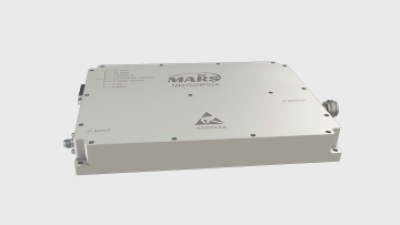
The MM1020P53A model from Mars represents a significant advancement in the realm of RF broadband power amplifiers, specifically designed to operate within the 1 to 2 GHz frequency range. With an impressive output power of 200 W, this power amplifier is engineered to meet the demanding requirements of modern wireless communication, providing superior performance and reliability. The integration of Gallium Nitride (GaN) transistors not only enhances the overall efficiency but also delivers a remarkable power-to-volume ratio, making it an ideal choice for applications that require compact yet powerful solutions.
In today's rapidly evolving market, the demand for high-performance RF amplifiers is on the rise, driven by the proliferation of 5G technology and other advanced telecommunications applications. The strategic insights into market trends highlight the critical role of devices like the MM1020P53A, which can effectively support a wide range of applications, from telecommunications to industrial and instrumentation uses. As the industry continues to prioritize efficiency and performance, the MM1020P53A exemplifies the innovation necessary to meet these challenges, setting a benchmark for future developments in RF broadband power amplification.
FAQS
B amplifiers and why are they important in RF applications?
Class AB amplifiers utilize a push-pull configuration where two transistors alternately amplify the input signal, minimizing distortion during transition phases. This operation is essential for maintaining signal integrity in RF applications.
Class AB amplifiers are suitable for a variety of applications, ranging from wireless communication transmitters to audio amplification systems, making them an integral part of modern electronic design.
Effective thermal management is critical for maintaining optimal operating temperatures in Class AB amplifiers. Proper heat dissipation can enhance amplifier longevity by up to 30% and mitigate common overheating issues in high-power applications.
The choice of components, particularly high-linearity transistors and low ESR capacitors, is important. High-linearity transistors enhance distortion performance, while low ESR capacitors improve stability and bandwidth, ensuring reliable operation across frequencies.
Implementing newer GaN (Gallium Nitride) technologies can reduce distortion levels by approximately 15% compared to traditional silicon-based devices, thereby enhancing the performance of Class AB amplifiers.
Some best practices for optimizing performance include effective thermal management, using high-linearity transistors, and selecting capacitors with low equivalent series resistance (ESR) to ensure reliable operation and improved bandwidth.
Conclusion
So, the article titled "Unlocking Performance: The Ultimate Guide to Class AB RF Amplifier Technologies" really dives into the nuts and bolts of Class AB amplifiers and why they're such a big deal in RF stuff. It touches on important things like efficiency, linearity, and how much power they can spit out — giving you the lowdown on why Class AB designs often beat out Class A and Class B amps. Plus, it highlights some of the coolest recent tech advancements that help with thermal management and fine-tuning, showing just how much innovation is happening out there.
They also feature some real-world case studies that show how Class AB RF amplifiers actually work in places like telecom networks. These examples underline their reliability and solid performance. The guide even shares best practices for designing better Class AB amps—things like how companies, including Mars RF, use modern tools like SMT machines and high vacuum furnaces to keep quality top-notch. Overall, it’s a pretty thorough read meant to help anyone understand how to get the most out of Class AB RF amplifiers, no matter what kind of project they’re working on.



 EW
 Radar
 Test and Measurement
 Communication