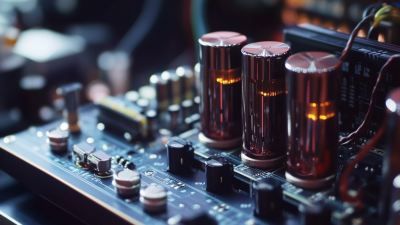
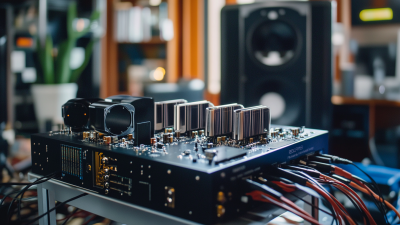
In today's rapidly evolving technological landscape, ensuring optimal signal integrity is paramount for the performance of various modern applications, from telecommunications to aerospace systems. One of the key components that contribute to enhancing signal integrity is the RF Synthesizer IC. At Mars RF Microwave, we are at the forefront of innovation, leveraging cutting-edge equipment such as SMT machines, high vacuum eutectic furnaces, and laser welding machines to produce high-quality RF Synthesizer ICs.
Our commitment to precision and efficiency allows us to meet the demanding requirements of signal integrity in complex systems, ensuring that our clients can achieve superior performance in their applications. By integrating advanced manufacturing technologies, Mars RF Microwave is dedicated to producing RF Synthesizer ICs that not only meet industry standards but also push the boundaries of what is possible in modern electronics.
Identifying Key Attributes of High-Quality RF Synthesizer IC Suppliers
In the rapidly evolving landscape of radio frequency (RF) technologies, the selection of high-quality RF synthesizer IC suppliers is crucial for enhancing signal integrity in modern applications. A recent report by MarketsandMarkets indicates that the global RF synthetic IC market is projected to reach $23 billion by 2025, driven by the surge in demand for innovative communication systems. This growth underscores the importance of identifying suppliers who not only meet industry standards but also possess advanced capabilities in design and manufacturing.
Key attributes to consider when evaluating RF synthesizer IC suppliers include their adherence to stringent quality assurance protocols, expertise in low-phase noise performance, and the ability to integrate with various modulation schemes. For instance, suppliers utilizing GaN technology have shown a significant reduction in power consumption, achieving efficiency levels exceeding 85%, according to a study published by IEEE. Additionally, examining a supplier's track record in delivering reliable products and their responsiveness to evolving market needs can provide insights into their long-term viability and partnership potential.
Evaluating Performance Metrics for Signal Integrity in RF Applications
In modern RF applications, maintaining high signal integrity is crucial for optimal system performance. Key performance metrics such as phase noise, spectral purity, and frequency accuracy significantly influence the overall reliability of RF signals. According to a report from the RF and Microwave Industry Association, phase noise can severely degrade receiver sensitivity and limit the dynamic range, leading to inefficient signal processing. Therefore, selecting RF synthesizer ICs with minimal phase noise characteristics—typically below -100 dBc/Hz at 10 kHz offset—is essential.
Moreover, the spectral purity of the signal produced by an RF synthesizer is vital for reducing spurious emissions and ensuring compliance with regulatory standards. A recent study highlighted that RF designs can boost performance by incorporating synthesizers with low harmonic distortion—ideally less than -30 dBc. This is particularly important in crowded RF environments where interference can compromise communication. Evaluating these metrics provides insights into the robustness of the synthesizers used, allowing engineers to enhance signal integrity, which is paramount in applications like telecommunications and radar systems.
RF Synthesizer ICs Performance Metrics for Signal Integrity
This chart illustrates the performance metrics of RF synthesizer ICs impacting signal integrity. Metrics include Phase Noise, Spurious Level, Output Power, Frequency Range, and Power Consumption, showcasing critical factors in modern RF applications.
Comparative Analysis of Leading RF Synthesizer IC Brands
In the rapidly evolving field of telecommunications, the importance of reliable signal integrity cannot be overstated. The choice of RF synthesizer integrated circuits (ICs) plays a pivotal role in determining the performance of modern applications, whether in mobile devices, remote sensing, or advanced IoT systems.
Leading brands have emerged in the market, each offering unique features that cater to diverse application needs. For instance, Analog Devices has made a name for itself with its low-phase-noise performance, which is critical in high-frequency applications. In contrast, Texas Instruments focuses on low power consumption without sacrificing output quality, making its ICs ideal for battery-operated devices.
Another prominent player, NXP Semiconductors, emphasizes versatility and integration, providing RF synthesizers that can seamlessly function in multiple configurations, thus reducing overall system complexity. Meanwhile, Qorvo stands out for its innovative designs that enhance linearity and reduce unwanted harmonics, which can significantly impact signal clarity.
A comparative analysis of these brands reveals not only their individual strengths but also the importance of selecting the right RF synthesizer IC for specific application requirements. By understanding these options, designers can enhance their system's signal integrity and overall performance more effectively.
Best Practices for Integrating RF Synthesizer ICs in Modern Designs
In modern RF applications, ensuring optimal signal integrity begins with the careful integration of RF synthesizer ICs. Utilizing low phase noise voltage-controlled oscillators (VCOs) has proven essential in minimizing signal degradation. Recent advancements in microwave circuit design allow for silicon-based VCOs to achieve phase noise levels that significantly enhance performance while also reducing the size of RF systems. This transition not only simplifies the design cycle but also aids in addressing the challenges presented by noise transfer functions in synthesizer design, as highlighted in the ongoing five-part series on noise shaping.
At Mars RF Microwave, we leverage state-of-the-art manufacturing technologies to produce high-performance RF synthesizes. Our SMT machines and high vacuum eutectic furnaces ensure precision assembly and optimal thermal performance, which are critical for maintaining low noise performance across various designs. The integration of advanced automated processes, such as laser welding and automatic dispensing, further enables us to meet the rigorous demands of modern circuit design. By continually refining our production capabilities, we can contribute to the development of synthesizers that not only meet but exceed industry standards, resulting in reliable and efficient RF solutions for an ever-evolving market.
Understanding the Role of Signal Integrity in RF System Reliability
Signal integrity is indispensable in ensuring the reliability of RF systems, especially in power line communications (PLC), where impedance mismatch poses a significant challenge. When impedance is not properly matched, signal power transfer suffers, leading to degraded communication quality and increased error rates.
Industry reports indicate that up to 30% of signal loss in PLC can be attributed to such mismatches, underscoring the need for precise RF design and component selection to mitigate these issues.
Proper implementation of advanced RF isolators can significantly enhance signal integrity by preventing unwanted interference and reflection, thus improving overall communication reliability in critical applications.
As the demand for high-performance RF systems swells with the advent of up-and-coming technologies such as 5G and 6G, the role of advanced RF connectors becomes ever more crucial. Research reveals that using cutting-edge materials and precision engineering can decrease signal attenuation by as much as 40%, which is essential for maintaining signal clarity across a network.
Furthermore, rugged EMI-filtered interconnects are crucial for ensuring uninterrupted performance in military and aerospace applications, where reliability is paramount. Therefore, investing in superior RF components is critical to enhancing signal integrity and meeting stringent performance standards in modern communication systems.
Future Trends in RF Synthesizer Technology and Supplier Innovations
The landscape of RF synthesizer technology is rapidly evolving, driven by the demand for higher frequency performance and increased signal integrity in modern applications. Recent industry reports forecast that the RF synthesizer market will grow from $1 billion in 2022 to approximately $2.2 billion by 2027, highlighting a compound annual growth rate (CAGR) of about 14%. This surge is propelled by advancements in semiconductor technologies and the relentless pursuit of miniaturization, enabling ICs to offer superior performance while occupying less real estate on boards.
Innovations by leading suppliers are focusing on integrating advanced features into RF synthesizers. For instance, the introduction of direct digital synthesizers (DDS) has revolutionized frequency generation, providing excellent phase noise performance and resolution, crucial for applications in telecommunications and radar systems. Furthermore, emerging materials such as gallium nitride (GaN) are set to enhance efficiency and reliability, allowing for broader frequency ranges and enhanced thermal management.
**Tip: When selecting RF synthesizer ICs, consider devices with built-in calibrations to reduce time-to-market and minimize design complexities. Another important aspect to evaluate is the power consumption, as efficient devices can lower overall operating costs in the long run.** In addition, keeping an eye on suppliers that are continuously innovating with high-resolution output options can significantly improve overall system performance.
Solutions for Enhancing Signal Integrity with the Best RF Synthesizer ICs in Modern Applications - Future Trends in RF Synthesizer Technology and Supplier Innovations
| Parameter |
Value |
Comments |
| Frequency Range |
0.1 GHz - 20 GHz |
Broad range supports various applications |
| Phase Noise |
-100 dBc/Hz at 10 kHz offset |
Low phase noise enhances signal integrity |
| Output Power |
+10 dBm |
Sufficient for most RF applications |
| Power Supply Voltage |
3.3 V to 5 V |
Flexible supply options |
| Modulation Techniques |
FM, AM, PSK |
Supports diverse communication standards |
| Integration Level |
Highly Integrated |
Reduces external component requirements |
| Temperature Range |
-40°C to +85°C |
Suitable for harsh environments |
| Future Trends |
Increased use of AI and machine learning |
Optimizing signal integrity and performance |
FAQS
: RF synthesizer ICs are integrated circuits used for generating high-frequency signals in RF applications. They are crucial for maintaining optimal signal integrity and minimizing signal degradation.
Low phase noise VCOs are essential in reducing signal degradation, thereby enhancing overall performance and ensuring better signal integrity in RF systems.
Recent advancements include the development of silicon-based VCOs that achieve lower phase noise levels, which improves performance while reducing the size of RF systems.
The RF synthesizer market is expected to grow significantly, driven by advancements in semiconductor technologies, increased demand for higher frequency performance, and the trend toward miniaturization of components.
Direct digital synthesizers (DDS) are innovative frequency generation technologies that offer excellent phase noise performance and high resolution, making them ideal for telecommunications and radar applications.
Emerging materials like gallium nitride (GaN) are enhancing efficiency and reliability in RF synthesizers, allowing for broader frequency ranges and improved thermal management.
When selecting RF synthesizer ICs, consider devices with built-in calibrations for reduced design complexities and quicker time-to-market, as well as power consumption for lower operating costs.
Advanced manufacturing technologies, such as precision assembly and automated processes, ensure optimal thermal performance and low noise, which are critical for high-performance RF synthesizer designs.
High-resolution output options can significantly improve overall system performance by enhancing the quality and accuracy of the generated RF signals.
Leading suppliers are focusing on integrating advanced features, improving power efficiency, and utilizing new materials to provide enhanced performance and reliability in their RF synthesizers.



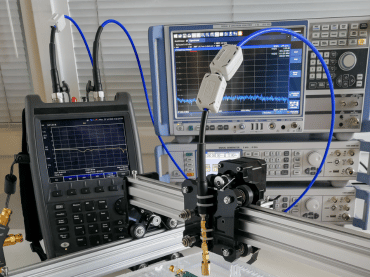 EW
 Radar
 Test and Measurement
 Communication