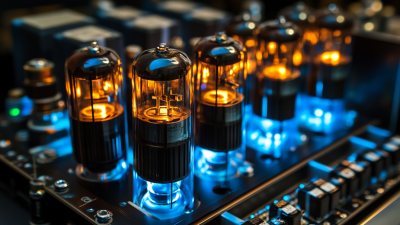
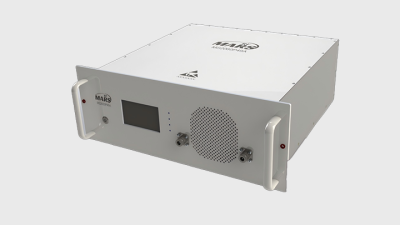
As we dive into what the tech world is shaping up to be in 2025, one area that’s really gearing up for some exciting changes is High Power Amplifiers. These little giants are super important for all sorts of things, from telecommunications and broadcasting to industrial automation. And you know what? The push for better performance and efficiency in these amplifiers has everyone buzzing with innovation. Companies are exploring new technologies that not only promise better capabilities but also aim to cut down on energy use.
Here at Mars RF Microwave, we’re all about hitting those high notes of excellence. Our production facilities are something else—decked out with cutting-edge machinery like SMT machines, high vacuum eutectic furnaces, and laser welding machines. I mean, these tools are crucial to helping us whip up high-quality amplifiers that really tackle the growing demands of the market. By staying on top of the latest trends and looking into alternative solutions, we’re excited to play our part in shaping the future of High Power Amplifiers while doing our bit for a more efficient tech landscape.
The Future of High Power Amplifiers: Key Trends to Watch in 2025
Looking ahead to 2025, it’s clear that the world of high-power amplifiers is about to see some big changes, all thanks to new technologies and shifting industry needs. One trend that’s really catching attention is how artificial intelligence is becoming a game-changer in amplifier design. Just think about it: AI can actually optimize how amplifiers process signals, allowing them to adjust on the fly depending on different loads and environments. This means we can expect better audio and communication quality than ever before!
And let's not forget about the push for green technology in the high-power amplifier scene. With everyone paying more attention to environmental issues, manufacturers are getting serious about creating energy-efficient amplifiers that don’t just sip power but also deliver amazing output. They’re looking at using cutting-edge materials and smart cooling solutions that not only make these devices more sustainable but also satisfy our craving for high-performance audio – all without leaving a giant energy footprint. With all these trends coming together, 2025 is gearing up to be the year of amplifiers that are not only powerful but also smart and eco-friendly. How cool is that?
Innovative Technologies Shaping High Power Amplifier Efficiency and Performance
As we take a closer look at the tech scene for 2025, it’s pretty fascinating to see how high power amplifiers are changing thanks to some cutting-edge technologies that are all about boosting efficiency and performance. A big player in this game is GaN, or Gallium Nitride, which is really stepping up with its impressive frequency capabilities and ease of manufacturing. This isn’t just about cranking up power; it’s also about better thermal management, which is super important for keeping things running smoothly in high-performance sectors like telecommunications and aerospace.
But it doesn’t stop there! The architectural advances tied to 6G wireless networks are also playing a significant role in shaping the future of high power amplifiers. By bringing together advanced RF components—like RF power amplifiers and low-noise amplifiers—these networks are set to deliver some crazy high data rates and connectivity options. And let’s not forget about all the ongoing research and development in this space; they’re really working hard to improve efficiency, cut down on energy use, and just generally enhance how power amplifier systems work, so they’re ready to tackle the next wave of wireless tech demands.
Market Growth Insights: The Demand for High Power Amplifiers by 2025
You know, the demand for high power amplifiers is really set to explode by 2025! This surge is mostly thanks to the tech advancements and the growing applications we’re seeing across different sectors. It’s pretty wild to think that the global aluminum nitride market is expected to jump from around $1.699 billion in 2025 to a whopping $2.588 billion by 2032. It really shows how much we’re leaning into high-performance materials for making amplifiers. Plus, the automotive audio market? Oh man, it’s gearing up to boom too! We’re talking about revenues climbing from $0.951 billion in 2025 to around $1.81 billion by 2032, and that’s at a solid compound annual growth rate (CAGR) of 7.2%.
Tip 1: As manufacturers shift gears toward high power amplifiers, they’re going to really need to focus on using advanced materials like low-temperature co-fired ceramics (LTCC) to boost performance. And you know, the market for LTCC silver paste is also on the rise, which totally supports the demand for high power amplifiers as their uses get more complex.
Tip 2: Oh, and let’s not overlook the fiber laser market. It’s getting ready for some impressive growth too—like, it’s projected to leap from $4.63 billion in 2025 to about $10.75 billion by 2032, marking a CAGR of 12.8%. This trend really shows how high power amplifiers are becoming essential in laser technologies, which just reinforces how crucial this sector is for the future of tech.
Comparative Analysis: Emerging vs. Established High Power Amplifier Brands
The high power amplifier (HPA) market is really set for a big shake-up by 2025! Both the veterans and newcomers in the industry are figuring out how to keep up with all these new tech demands that keep popping up. So, there's this report from MarketsandMarkets that says the global high power amplifier market is projected to jump from about USD 3.32 billion in 2020 to a whopping USD 5.67 billion by 2025. That’s an 11.3% annual growth rate – pretty impressive, right? Now, established brands have pretty much ruled the roost for years, thanks to their deep roots in experience and tons of research and development. But don’t underestimate the new kids on the block! They’re shaking things up with innovative tech and offering some seriously competitive options for those niche markets out there.
Take Mars RF Microwave, for example. They’re a great illustration of how having top-notch manufacturing gear can really elevate product quality and help you stay ahead in this fast-changing scene. By using SMT machines, high vacuum eutectic furnaces, and gold wire bonding machines, they crank up the precision and reliability in their amplifier production. Plus, these fancy tools make everything run smoother and allow them to ramp up production, whether they’re catering to big corporations or smaller clients. As the competition heats up between the emerging and established brands, companies like Mars RF are really in a sweet spot to ride the wave of industry trends. They’re not just keeping up; they’re committed to innovation and delivering high-quality results. In the end, it looks like the blend of modern tech with all that traditional know-how is what’s going to shape the future of high power amplifiers.
Integrating AI: Enhancing Performance in High Power Amplifiers
You know, the way AI technology is being integrated into high power amplifiers (HPAs) is pretty exciting and definitely setting the stage for better performance and efficiency come 2025. These smart algorithms are really becoming a game changer, optimizing things like output power, linearity, and efficiency. It’s amazing how manufacturers are pushing the limits of what HPAs can do! A report from MarketsandMarkets predicts that the global high power amplifier market is expected to hit a whopping USD 7.1 billion by 2025, mainly thanks to strides in artificial intelligence and machine learning.
At Mars RF Microwave, we're all about that cutting-edge manufacturing vibe. With our high vacuum eutectic furnaces and laser welding machines, we're cranking out innovative HPAs that are really stepping things up with AI tech. Plus, our advanced equipment—like the fully automatic PCB cleaning and dispensing machines—keeps quality and precision at the top of our game. By tapping into AI, we can craft solutions that adapt right on the spot to real-time data, meaning our HPAs don’t just meet expectations; they blow past them when it comes to thermal management and power efficiency.
As we move into this new era, the relationship between AI and HPAs is marking a major shift in fields like telecommunications and satellite communications, where high fidelity and performance are a must. Companies that are diving into AI-enhanced tech are really setting themselves up to succeed, enjoying better lifecycle management, cutting costs, and boosting overall system performance!
2025 Tech Landscape: High Power Amplifiers Performance
Sustainability Trends: Eco-Friendly Innovations in Amplifier Design for 2025
As we approach 2025, the landscape of high power amplifiers is undergoing a significant transformation driven by a growing emphasis on sustainability. The future of amplifier design is increasingly informed by eco-friendly practices, incorporating materials and processes that minimize environmental impact. Innovations are not only focusing on performance but also on energy efficiency, aiming to reduce power consumption while delivering high-quality audio output. This trend aligns with broader sustainability movements observed across various industries, highlighting the importance of integrating eco-conscious approaches into technology.
Manufacturers are exploring novel methods to produce amplifiers with recyclable materials, contributing to a circular economy within the tech industry. Additionally, the adoption of sustainable practices in manufacturing processes can lead to reduced carbon footprints, reinforcing the idea that technology can coexist with environmental responsibility. As personalized experiences in the tech world continue to grow, we can expect high power amplifiers to evolve, marrying customization with sustainability to meet the demands of discerning consumers who prioritize both quality and eco-friendliness in their purchasing decisions.
Exploring the 2025 Tech Landscape: The Evolution of the Best High Power Amplifiers - Sustainability Trends: Eco-Friendly Innovations in Amplifier Design for 2025
| Amplifier Type |
Power Output (Watts) |
Efficiency (%) |
Weight (kg) |
Eco-Friendly Features |
| Class D |
1000 |
95 |
5 |
Recyclable materials |
| Class AB |
800 |
85 |
8 |
Low standby power |
| Hybrid |
1500 |
90 |
6 |
Solar charge capability |
| Digital |
1200 |
92 |
4 |
Energy-efficient chips |
| Class G |
900 |
87 |
7 |
Biodegradable casing |
Unlocking High Efficiency: Exploring the Mars RF GaN High Power Amplifier Subsystem MS1060P45A for Modern Applications
The Mars RF GaN High Power Amplifier Subsystem MS1060P45A exemplifies cutting-edge technology that is pivotal for modern telecommunication and broadcasting applications. Designed to operate within a frequency range of 1000MHz to 6000MHz, this subsystem delivers an impressive 30 Watts of saturated output power. This capability allows it to manage high-demand tasks efficiently, effectively serving markets that require robust and reliable amplification solutions.
One of the standout features of the MS1060P45A is its integration with a universal voltage power supply, catering to an operating voltage of 220V typical. This flexibility not only enhances usability across various applications but also aligns with the industry's trend towards seamless integration of components. Recent market research indicates that the demand for GaN-based solutions is surging, with projections suggesting that the global GaN market is expected to reach $3.24 billion by 2027. Such growth highlights the need for efficient and high-performance amplifiers like the MS1060P45A in an era where performance and efficiency are pivotal.
Furthermore, the transition from traditional silicon-based amplifiers to GaN technology offers numerous advantages, including greater thermal efficiency, reduced size, and improved linearity. This technological evolution is reshaping the landscape of RF amplification and allowing industries to achieve higher levels of operational efficiency and reliability. The MS1060P45A stands as a testament to these advancements, promising to meet the evolving needs of modern applications while setting a high standard in performance and durability.
FAQS
: Key technologies such as GaN (Gallium Nitride) are leading advancements by improving frequency performance, manufacturability, and thermal management.
GaN technology allows for increased power output and better thermal management, which is essential for high-performance applications in fields like telecommunications and aerospace.
6G networks are integrating advanced RF components to support higher data rates and connectivity, driving innovations in high power amplifier efficiency and performance.
Manufacturers are adopting eco-friendly practices and materials to minimize environmental impact, focusing on energy efficiency and reducing carbon footprints.
Using recyclable materials contributes to a circular economy and helps reduce the environmental impact of amplifier manufacturing.
Consumers are increasingly prioritizing eco-friendliness and high-quality audio output, leading manufacturers to evolve their products to meet these demands.
Amplifiers are evolving to enhance customization and sustainability, aligning with broader eco-conscious trends in technology while improving performance.
Research is concentrated on achieving higher efficiency, reducing energy consumption, and enhancing overall performance to meet the needs of next-generation wireless applications.
Designers are innovating to reduce power consumption while ensuring that the amplifiers deliver high-quality audio output.
We can expect a blend of high performance and sustainability in amplifier design, catering to consumers' demands for quality and environmental responsibility.



 EW
 Radar
 Test and Measurement
 Communication